
Twentynine Palms Previous Residents
A house-history search needs a source for each era. Begin with the current parcel in the city GeoViewer or County Parcel Access, save the APN and legal description, and then use the Recorder's name-based index. The table shows what each documented layer can contribute to a previous residents timeline.
| Source | Years it covers | Where held | What it shows |
|---|---|---|---|
| Recorder general index | 1925 to present | San Bernardino County ARC | Parties, title or document date and number |
| Grantor and grantee workflow | 1958 to present | Recorder online or office | Working deed-chain search layer |
| Earlier name index | Before 1958 | Main Recorder decade microfilm | Older party and instrument trail |
| Assessor lot books | 1895 to about 1950 | County Historical Archives | Taxpayer, legal description and values |
| Assessment valuations | 1978 to present | County Assessor | Value chronology and parcel history |
| Census | Through 1950 | National Archives and public copies | Household and occupant snapshot |
| Local newspapers | 1932 to present, with stated gaps | Historical Society | Residence clues, events, obituaries and notices |
The general index date and the practical deed-chain date are both real research facts. Keep them labeled. A previous residents search may require the office counter or microfilm even when a later deed appears online.
Twentynine Palms Deed Chain
The Recorder cannot begin an ownership search from a street address. Use the parcel map to obtain the current assessed-owner lead, then search that owner as grantee. Match the legal description and instrument before treating the name as part of the chain. The matched deed supplies a grantor. Search that grantor as an earlier grantee and repeat.
- Enter the address or APN in the city GeoViewer and County Parcel Access. Save the APN, situs, legal subdivision, and current owner lead.
- Search the current owner as grantee in ARC's Recorder index. Compare the legal description, spelling, document title, and recording date.
- Order or inspect the matched instrument when the index does not show the detail needed. Record document number, book or page, parties, and date.
- Take the seller or grantor from the instrument and search that name as a prior grantee. Repeat with the next matched legal description.
- When the chain crosses 1958, arrange the appropriate decade microfilm or office visit. Keep every gap and spelling choice in the timeline.
This is an ownership trail. It does not yet say who lived in the house. Use a dated newspaper, census, directory, probate, or other source for occupancy evidence.
- Grantor
- The party conveying or granting an interest in the instrument.
- Grantee
- The party receiving the interest named in the instrument.
- Chain of title
- A linked sequence of instruments showing transfers for the same legal description.
- Legal description
- The tract, subdivision, lot, or section language that identifies the land beyond a street label.
Twentynine Palms Legal Description Matches
A surname match is not enough in a previous residents search. Two people can share a name, and one person can appear with initials, a suffix, a trust, or a changed spelling. Legal description is the parcel test. Compare tract, subdivision and lot, or section, township, and range language. Save the APN and map reference beside the instrument number.
Recorder index metadata can show grantor, grantee, document number, title, and recording date. The underlying legal description may require a copy or office inspection. Remote images are not displayed for every record. The county allows ordinary index searches without turning the index into a title opinion, and protected online-image restrictions still apply.
When the deed and map disagree, ask ARC or a qualified title professional about the legal question. A house-history timeline can describe the records without deciding insurable title.
Note: The matching legal description is the bridge between two deed entries, not the person's name by itself.
Twentynine Palms Seller-Buyer Chain
Each generation of a deed chain should be recorded as a separate row. Use columns for recording date, grantor, grantee, document number, legal description, source location, and confidence. Add a different pair of columns for known listed occupant and source date. This prevents an owner from being silently rewritten as a resident.
The Recorder's ordinary copy route supplies noncertified records by email and certified records by shipment. Mail goes to 222 W. Hospitality Lane, first floor, San Bernardino, California 92415-0022. The stated return time is one to two weeks for the recorder copy route, and appointments are strongly encouraged. Cards add 3.5 percent. Mail charges change, so check the current office instructions before paying.
A previous residents trail can end at a missing image, a common name, a legal-description change, or the 1958 microfilm boundary. Mark the end point clearly. Do not fill a gap with a guessed person.
Twentynine Palms 1958 Microfilm Boundary
The county's detailed property-research guide describes the workable grantor and grantee chain from 1958 forward. Earlier indexes are on decade microfilm at the main Recorder. The general official-record page advertises a 1925-present index, so a researcher should preserve both statements and identify whether a fact came from general metadata, a scanned image, microfilm, or a clerk-assisted search.
For a pre-1958 parcel, plan the office or microfilm step before deciding that previous residents cannot be found. The Hall of Records in San Bernardino has the fullest historical route. Hesperia provides official-record content inspection, while map copies are available at the Hall of Records. Use the county property-research guidance and contact staff before a long trip.
The ARC Official Public Records page and the county chain guide describe the two access layers.
Twentynine Palms Lot Books
County Historical Archives lot and parcel books run from 1895 to about 1950. They can show taxpayer, legal description, land value, improvement value, marketable tree or vine value, and water value, organized by school district and legal description. The first appearance or change in improvement value can help date development activity.
An improvement-value entry does not say whether the improvement was a house, barn, shed, or another structure. It also does not name every occupant. Pair the lot-book entry with the deed chain, census, local newspaper, and a directory or family source. The County Archives holds probate from 1853 to 1926 and Great Registers of Voters from 1866 to 1908, but its building is currently described as closed. Contact staff by email or phone before travel.
Lot books are especially useful when an older source uses a legal description rather than a modern street number. They make the previous residents timeline more precise without pretending that an assessment line is a household record.
Twentynine Palms Households and Census
Ownership shows the transfer of land. Census and newspapers supply dated household clues. The Historical Society holds all Out Post issues from 1932 to 1934, nearly every The Desert Trail issue from 1935 to the present, assorted 29 Palms News issues from 1960 to 1976, people files, yearbooks, organization records, oral histories, books, and photographs.
- Place the deed transfer dates on a line, with owner names and legal-description notes.
- Search the 1950 census and earlier ten-year census years for the address, family, and locality.
- Search newspaper notices, obituaries, school columns, civic items, and base publications around each transfer.
- Compare a directory or telephone listing while retaining the exact printed place name and issue date.
- Mark the evidence as owner, listed occupant, event participant, or interment. Do not merge the labels.
The historical shelf is covered in the Twentynine Palms city directory collections material. Its value here is the household layer that can sit beside, not inside, the deed chain.
Twentynine Palms FamilySearch Images
The Twentynine Palms FamilySearch Center at 73002 El Paseo Drive can help when a digitized image is restricted to an affiliate or center. Catalog search can use place, keyword, title, author, subject, surname, call number, or film, fiche, and image-group number. Rights vary by image. A catalog record is not a promise of open remote viewing.
For house-history research, use the center to locate a census, family-history item, or other image that fits a known date and place. Copy the catalog title, image group or film reference, access condition, and the exact name shown. Then compare the result with deeds, newspapers, and cemetery records.
The local FamilySearch Center page supplies the center details.
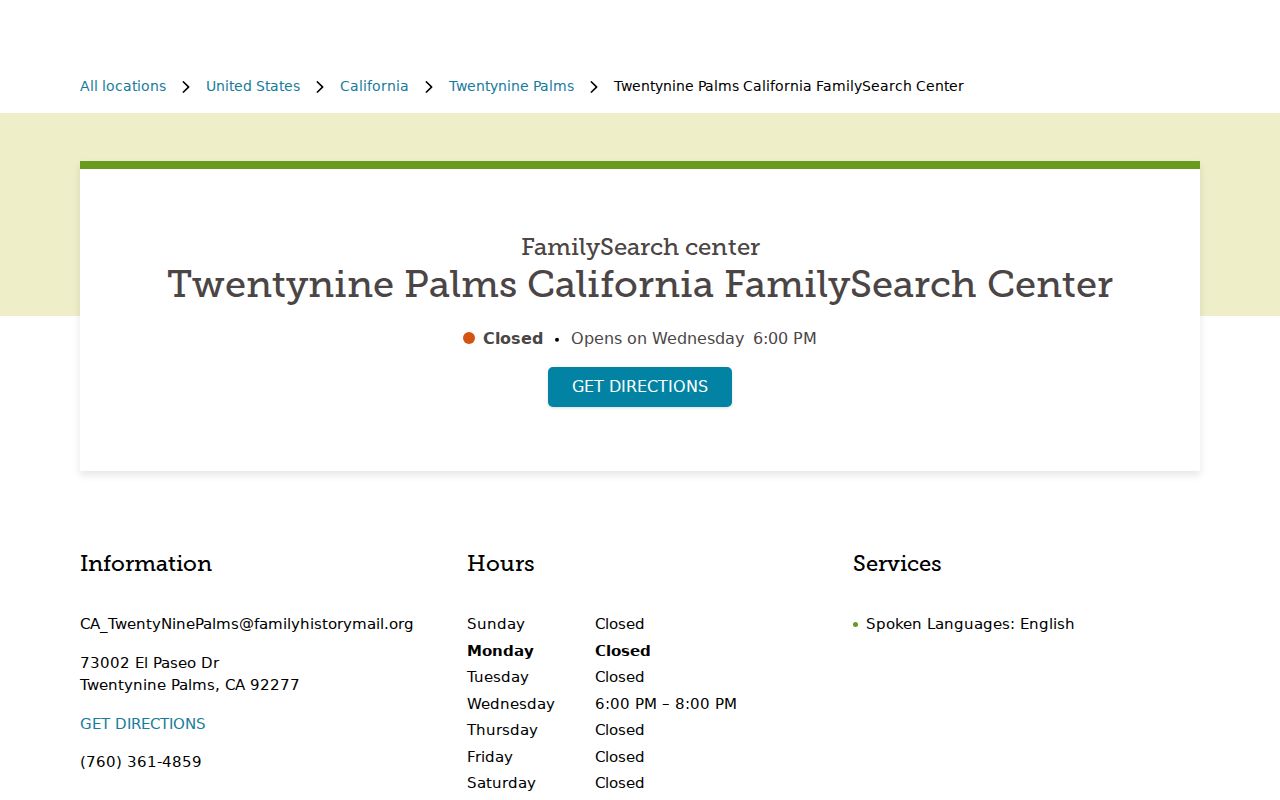
The center is an access channel for historical images, not a custodian that certifies a present address.
Twentynine Palms Cemetery and Vital Records
A death, marriage, or birth record can close part of a household trail when the copy rules allow access. San Bernardino County uses certified and informational copies, with authorized classes for many certified requests. A mailed authorized copy needs a notarized sworn statement, while an informational request follows a different path. Exact spelling matters, and a no-record search can lead to a Certification of Search.
The official Twentynine Palms Public Cemetery District search adds first, middle, last, variant, cemetery, section, block, lot, space type, born, died, interred, veteran, rank, branch, war service, and memorial fields. Interment proves placement in the cemetery. It does not prove the decedent's last residence or ownership of a parcel.
The county vital-record page explains copy choices, while the California Department of Public Health forms show the statewide ordering route. The official cemetery search supplies the interment fields.
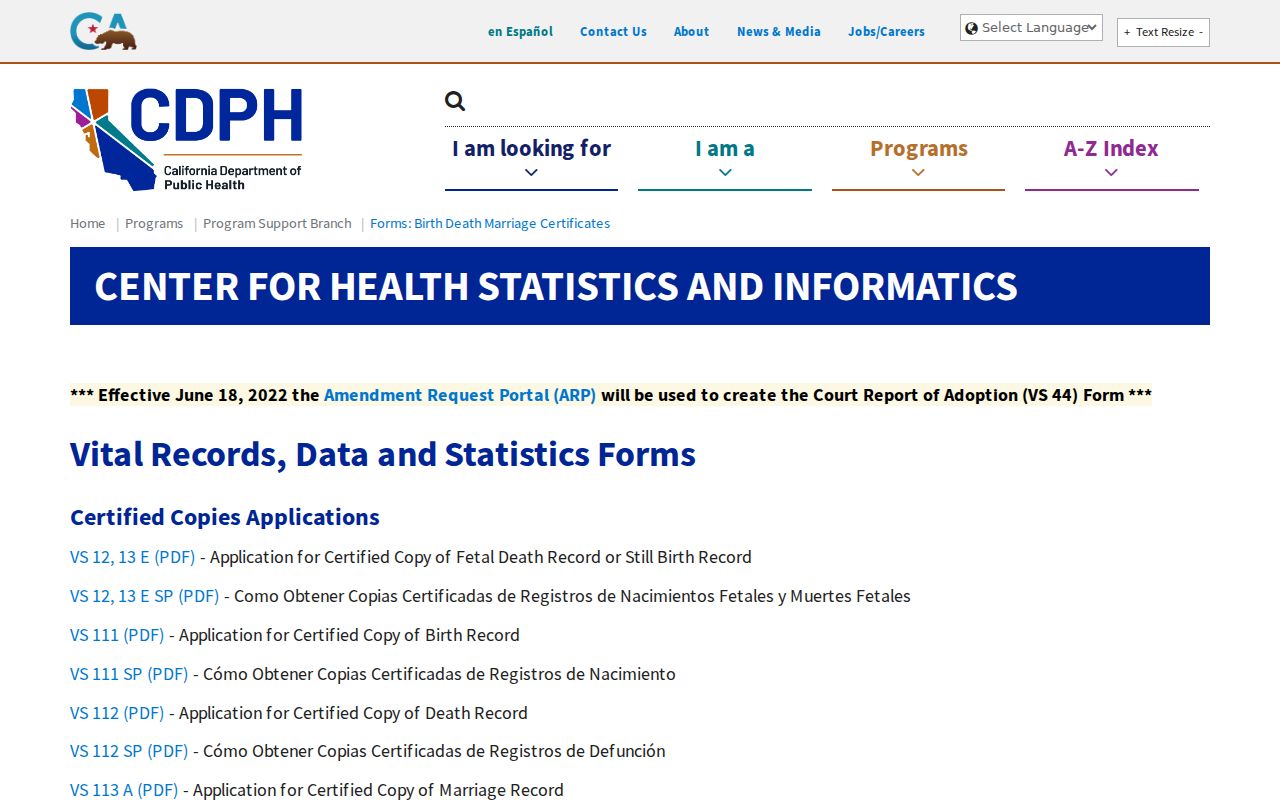
The form image shows why requester status and copy type belong in a previous residents research note.
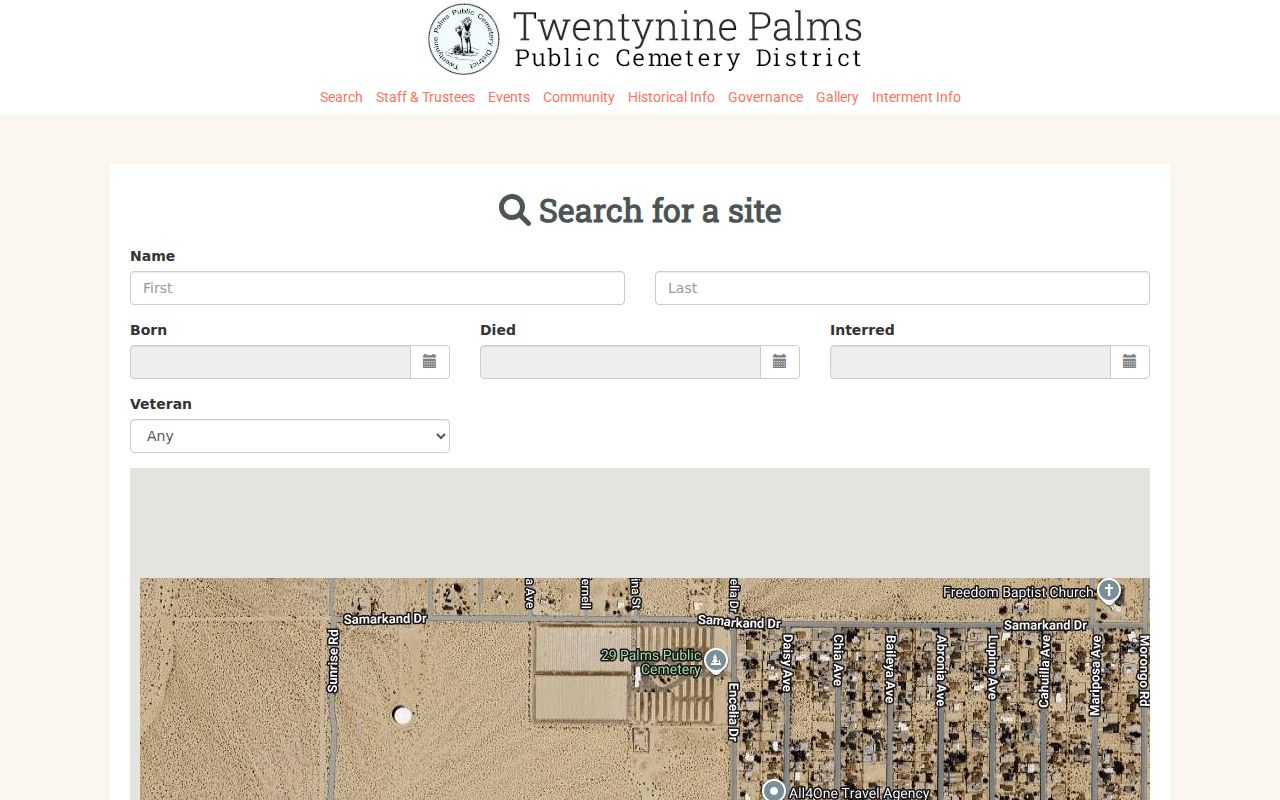
Cemetery placement can corroborate a dated obituary or family file, but it remains a separate evidence category from the deed chain.
House-history limit. Previous residents research may support a careful dated connection to an address. Use it for lawful family and property history, never to stalk, harass, threaten, or harm anyone.