
Twentynine Palms Neighbor Parcel Sources
A block lookup should begin with the physical parcel and then move outward. The source table separates adjacency, ownership leads, historical people, and civic documents. No row is a complete neighbor list.
| Source | What it shows about a block | Access |
|---|---|---|
| Twentynine Palms GeoViewer | Adjacent lot geometry, roads, aerial, city and Sphere layers | Free map viewer |
| County Parcel Access | APN, parcel summary, assessed-owner lead and property facts | Free map; protected data suppressed |
| ARC Recorder index | Named parties to deeds, liens, maps, releases and notices | Free index; copies by order or office |
| Restricted voter file | Authorized registration geography and voter fields | Qualified statutory purpose only |
| Historical sources | Older listed households and local events | LOC, Society and census collections |
| City documents | Public civic participation, minutes, claims and actions | Free keyword search or request |
Start with the first three rows for a present parcel. Use the historical and civic rows only when the question is about an older name, a public action, or community history. The record type must stay beside the conclusion.
Click Around a Twentynine Palms Parcel
The city map instructions document address and APN search, parcel layers, aerial imagery, city and Sphere of Influence boundaries, zoning, trails, flood, and seismic layers. A neighbor lookup can use those layers to establish which lots sit to the left, right, opposite, and rear of a target parcel. The research did not verify a buffer, radius, or measure tool, so the method is a visual parcel walk.
- Enter the target address or APN and confirm the selected polygon, road, and boundary layer.
- Zoom until the target parcel and nearby lot lines are clear. Turn on only the layer needed for the next question.
- Click adjacent parcels and record each APN, subdivision reference, and visible relationship to the target.
- Move each APN into County Parcel Access and save the assessed-owner lead, situs, mailing distinction, and access date.
- Use the Recorder index only after the person or entity key is known. Keep every deed result tied to the correct legal description.
This process maps neighbors as land parcels first. It does not claim that an adjacent owner is the person who uses the property today. It also does not identify all of your Twentynine Palms neighbors.
Twentynine Palms APNs into Deeds
APN is the stable handoff between the map and the county property roll. Use it to avoid a broad road-name search, then compare the situs and any mailing address. If an assessed-owner lead is displayed, search that name as a grantee in ARC's Recorder index and match the legal description. The Recorder cannot begin from a street address, and an index entry is not a title opinion.
County public-record requests can supply an identifiable existing record when the web index is not enough. A request should name the address or APN, record type, office, and bounded date range. Do not ask for an investigative list of everyone near a property. Protected personal details may be withheld or redacted.
The ARC public-records request route describes the county channel.
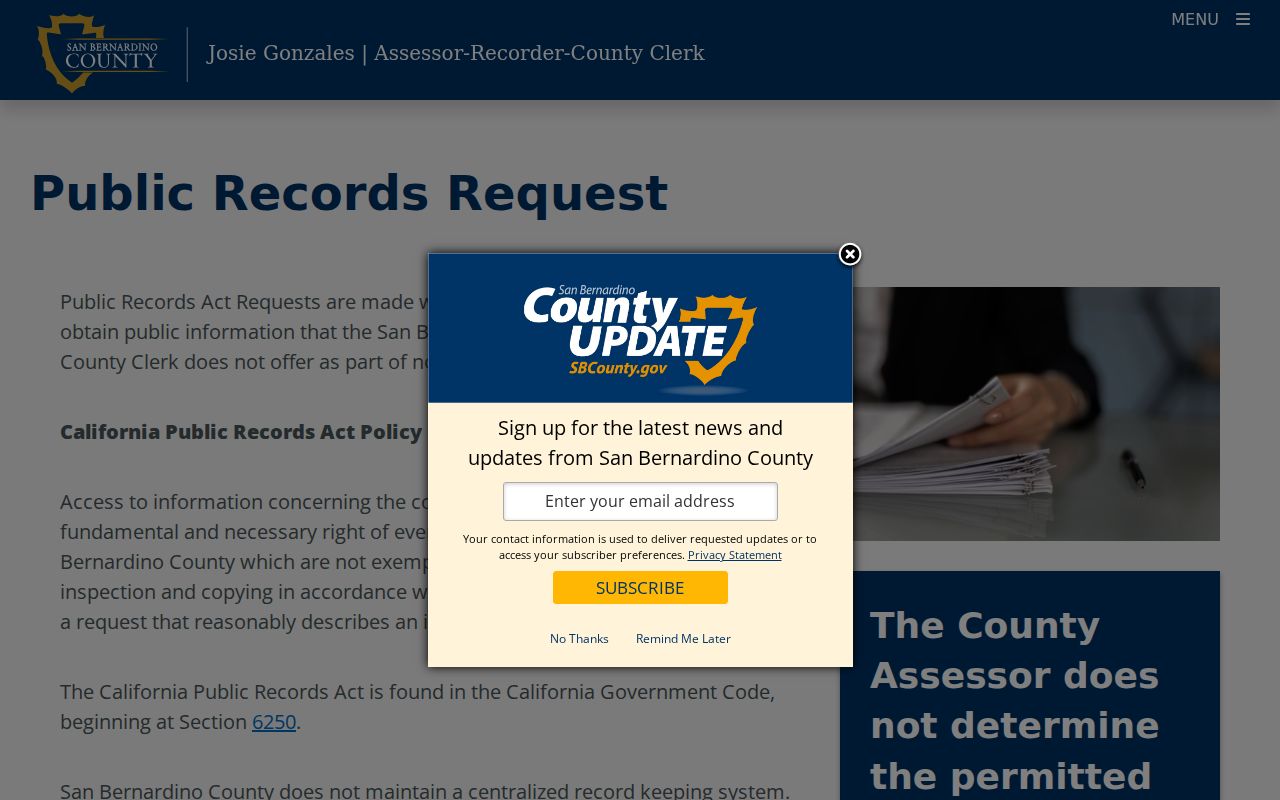
The request image illustrates a custodian route. It does not replace the parcel and APN work that makes a request precise.
Twentynine Palms Owner and Occupant
Neighbor lookup errors often begin when three different fields are read as one. An owner is the party reflected in the assessment or instrument record. A mailing address is where correspondence goes. An occupant or household member may not appear in either source. A deed party can be an estate, trust, business, or prior owner, and a public business address can be an address of record rather than a home.
Keep the language narrow. Say that a person is an assessed-owner lead or a recorded party on a dated instrument. Do not call that person a neighbor merely because the parcel touches the target lot.
Twentynine Palms Voter Records
My Elections Gateway is an authenticated self-service tool for a voter's own registration, districts, sample ballot, polling place, ballot status, election results, and related information. It is not searchable by a visitor entering somebody else's street address. State or county voter files require a qualified purpose under Elections Code section 2194, with restrictions on redisclosure and use.
A qualified file can include name, date of birth, registration date, residence and mailing address, precinct, contact information, party preference, and optional participation or district data. Confidential voters, preregistrants, Safe at Home participants, signatures, unique identifiers, and license or Social Security details are excluded. Ordinary block curiosity is not a substitute for a qualified statutory purpose.
The California voter-file request instructions explain the qualification rules.
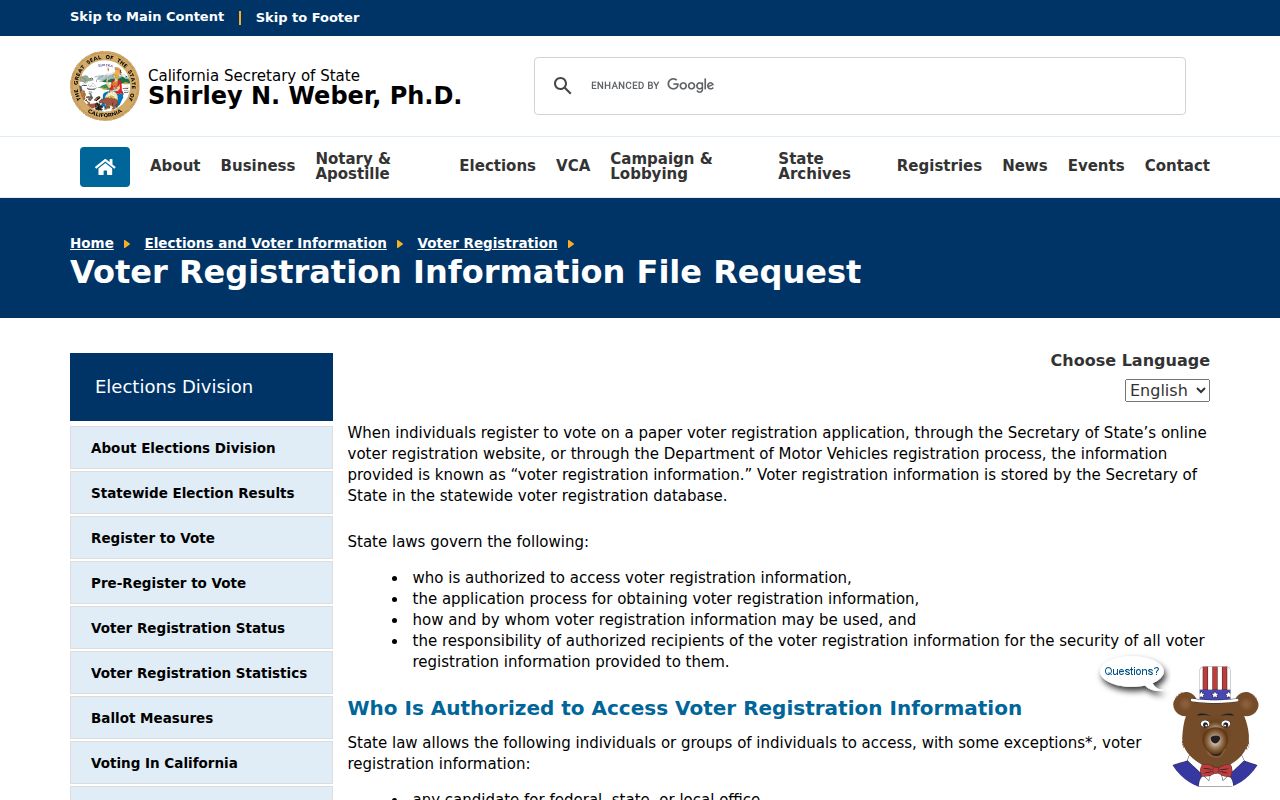
The file-request path is controlled access. Use open parcel, court, historical, and city-document sources for an ordinary lawful block study.
Twentynine Palms City Document Clues
The city E-Resources Library searches public legislative documents by keyword. Its controls include a quick keyword, exact phrase, all words, one or more words, close proximity, exclusion, sort order, location, and browse. Results can show a document title, description, and link. Names may occur in minutes, claims, contracts, appointments, public comments, or historical city business.
A city document can show public participation or an official action connected with a date and subject. It is not a neighborhood roster. The City Clerk administers the Records Management Program and can receive a request for an identifiable existing document. City GIS, planning, building and safety, code enforcement, and Finance records each have their own scope.
The Twentynine Palms legislative document search is the public keyword route.
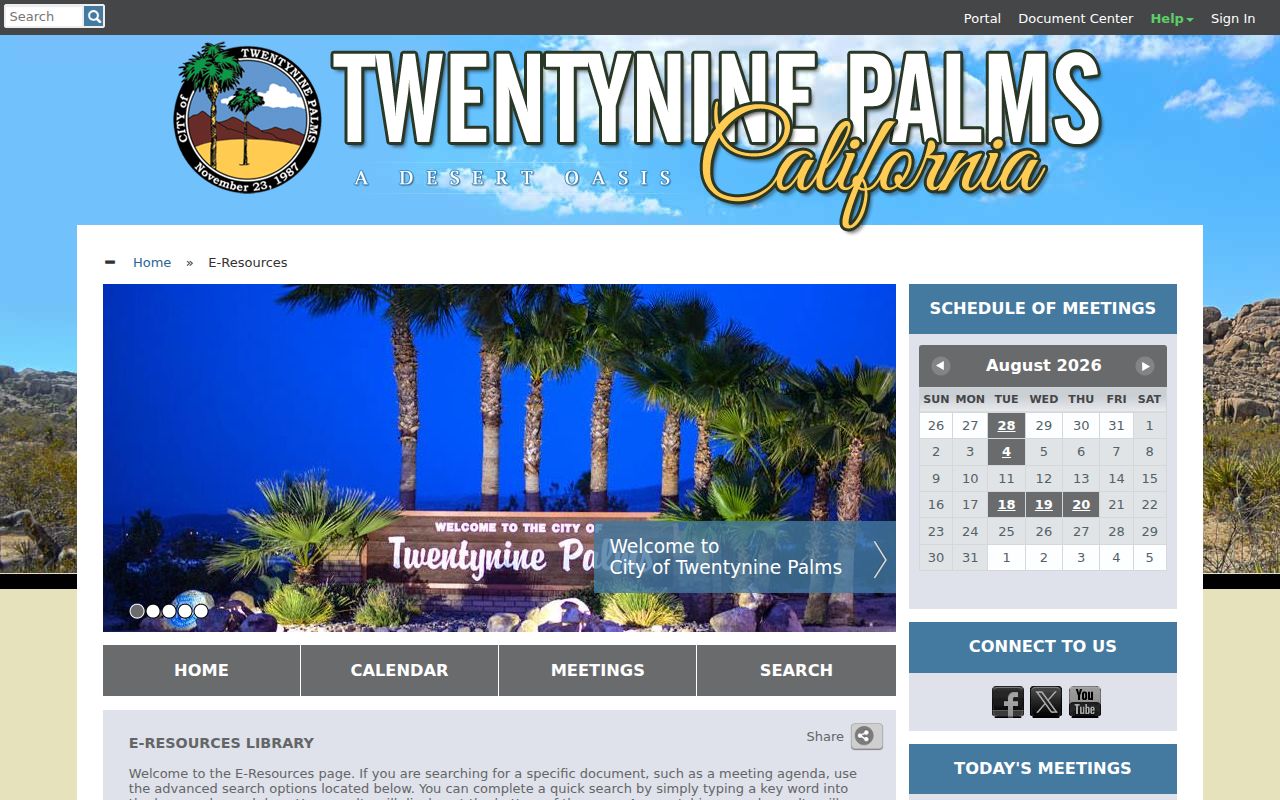
Use the result title and date as a civic clue, then read the source document before attaching a name to the block.
Twentynine Palms Association Roster Gap
The research did not verify an official neighborhood-association umbrella, HOA directory, block roster, congregation list, veterans-post roster, or stable chamber membership directory for Twentynine Palms. Member lists remain private unless an organization chooses to publish them. A neighbor lookup should not manufacture a contact card or imply that an association covers a parcel.
| Public community source | Possible use | Limit |
|---|---|---|
| City meetings and documents | Find public actions, appointments, and comments | Not a membership roster |
| Historical Society organization records | Trace past clubs, groups, and local activity | Collection and date limits apply |
| MCAGCC or MCCS resource directory | Identify current institutions and services | Does not list households |
| Newspaper civic columns | Find dated events and named participants | Absence is not proof of nonparticipation |
These sources add community context without turning public activity into a private contact list. When a group publishes its own address or event, use the group's source and date.
The absence of a public association index is itself a useful result. It means a parcel map can show adjacency, while a city meeting or newspaper can show a dated public event, but neither source can supply a private membership roster. The Historical Society's organizational files can help with past groups, not current household contacts.
Official and Commercial Neighbor Tools
Official records and commercial neighbor tools serve different purposes. A county roll, Recorder index, court file, or city document has a named custodian and a defined record type. A commercial compilation can mix public, broker, and volunteered data, with uncertain freshness and identity matching. Neither should be treated as a full block roster.
| Question | Official record route | Commercial compilation |
|---|---|---|
| Which land touches the address? | GeoViewer parcel layer and APNs | May show a mapped or inferred address |
| Who is tied to an instrument? | Recorder party, date and document | May blend old names or omit the instrument |
| How is a record corrected? | Contact the custodian with the identifier | Use the vendor's separate correction process |
| What is private? | Statutes and access rules state the boundary | Compilation scope and source may be unclear |
For a Twentynine Palms neighbor lookup, official does not mean complete. It means the source's role can be checked. Commercial does not mean current. It means extra verification is needed.
Twentynine Palms Neighbor Lookup Limits
Some nearby people will not appear in open parcel or deed records. Safe at Home can provide a substitute mailing address for qualifying protected people. Confidential voter provisions, protected assessor data, DMV restrictions, sealed court files, and vital-record copy rules can all end a neighbor lookup. A public map establishes adjacency, not permission to reconstruct a protected address.
Use a block lookup for lawful personal history, property curiosity, civic research, and a clearly bounded record request. If an official record is wrong, send its identifier and proof to the custodian. If the desired fact is not public, accept the boundary instead of joining scattered clues into a private profile.
California Penal Code section 646.9 addresses repeated malicious following or harassment paired with a credible threat and intended reasonable fear. Public records do not authorize stalking, doxxing, threats, or harassment. The safest neighbor lookup ends with a parcel or public-record fact rather than an attempt to identify every person nearby.
Lawful use. Twentynine Palms neighbor records may support careful research. Do not use a neighbor lookup to stalk, harass, threaten, intimidate, or harm any person.